
The trucking industry has never been short on suppliers willing to sell you something cheaper.
Cheaper materials. Cheaper components. Cheaper brakes.
And today, there are more of them than ever, thanks in large part to the flood of low-cost imports from China that have worked their way into distribution channels, onto parts shelves, and underneath the trucks American fleets depend on every day.
NeoBrake has been watching this happen for a long time. And for just as long, we’ve been looking for ways to help fleets avoid the consequences of buying on price alone.
Since NeoBrake CEO Rick Ballew first got into the brake business, he’s seen the industry change in ways that would have been hard to imagine in the early days. But one thing hasn’t changed: brakes aren’t a product where performance is optional.
Commitment From Day One
When NeoBrake was founded in 1988, the industry was already navigating one of its most significant transitions: the move away from asbestos-based friction materials.
Asbestos-based friction material had performance characteristics that were difficult to replicate. It was durable, heat-resistant, and effective under demanding conditions. The challenge of replacing it wasn’t just regulatory. It was technical.
Finding non-asbestos formulations that could match the stopping power and wear characteristics fleets had come to rely on required real investment.
NeoBrake made that commitment.
For nearly four decades, we’ve worked to develop and refine non-asbestos brake formulations engineered to perform as close to that original standard as possible. It’s painstaking work. It’s expensive work. But it’s work that has to be done if you’re serious about protecting the fleets that depend on you.
Not every manufacturer has chosen that path.
The Road Too Often Traveled
Some have taken shortcuts in formulation. Others have reduced material quality to protect margins. And increasingly, the market has been overrun with cheap brake products from China that appear to be built around a price point rather than a performance standard.
They arrive looking the part. The dimensions are correct. The packaging is professional. But what’s inside can tell a very different story once those brakes are put to work on a loaded truck traveling American roadways.
Fleets that have learned this lesson the hard way already know what it costs.
It costs in shortened service life and premature replacements. It costs in unplanned downtime, with trucks pulled off routes, deliveries delayed, and schedules disrupted. It costs in labor hours spent doing brake jobs that shouldn’t need to be done yet.
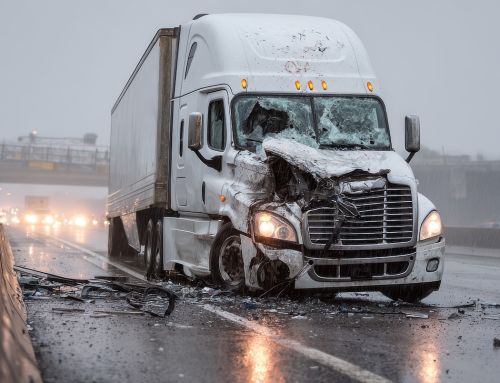
And in the worst cases, the cost is something no fleet manager wants to think about: a brake system that fails when a driver needs it most.
Protecting fleets means telling the truth about all of it.
What Fleets Deserve to Know
NeoBrake has been sounding the alarm for years. Not because it makes for good marketing, but because we believe fleets deserve to make informed decisions.
They deserve to understand what’s really at stake when choosing what goes on their trucks. They deserve to know the difference between a brake component built to perform and one built to hit an attractive price point. And they deserve to have a manufacturer in their corner who isn’t afraid to tell them the truth.
That’s the role NeoBrake has never walked away from.
It’s also why we’ve never stopped investing in better products. Innovations like the Matrix NeoCast™ represent what’s possible when a manufacturer refuses to stand still – when the goal isn’t just to meet today’s standard, but to push beyond it.
Because the demands placed on commercial brakes don’t stand still either. Heavier loads. More miles. Higher expectations. Trucks on today’s roads need brakes that are built for today’s realities.
Every Stop Has A Bottom Line
Premium brake products that last longer mean fewer replacements. Fewer replacements mean less downtime. Less downtime means more trucks moving, more deliveries completed, and less revenue loss to the maintenance shop.
The case for quality isn’t just about safety. It’s about protecting the bottom line that keeps every fleet in business.
That’s been NeoBrake’s message since Rick Ballew founded this company in 1988.
Performance over profits. Fleets over shortcuts. Safety over the path of least resistance.
Meanwhile, the marketplace has gotten more crowded, the competition has gotten cheaper, and the pressure to choose on price alone has only gotten stronger.
These conversations are more important now than they’ve ever been. So NeoBrake will continue to sound the alarm and inform the industry.
Because at the end of the day, success isn’t measured by how many brake products leave our facility.
It’s measured by the trucks that stop safely. The drivers who return home. The fleets that remain productive.
That’s what has driven NeoBrake since day one – and what will continue to drive us for years to come.
So, what’s stopping you?