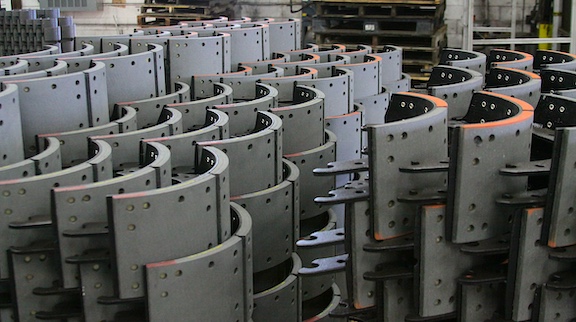
We talk about a lot of things in the heavy-duty trucking industry. Price. Brand names. Part numbers. Whether a brake fits a certain application, and so on. But one thing we don’t talk about nearly enough is what’s actually inside the friction material – the minerals, resins and other compounds that can determine how a brake lining performs when everything is on the line.
At NeoBrake, we think about it differently.
Because we know the difference between a brake lining that holds and one that doesn’t often comes down to the manufacturing decisions made long before the lining is riveted to a brake shoe.
Ultimately, these are decisions about which raw materials to use – and which ones to leave out.
“Baking” A Brake Lining
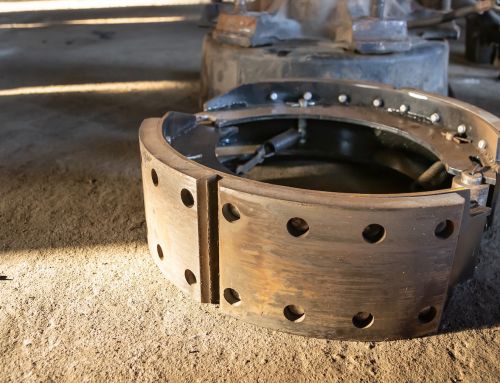
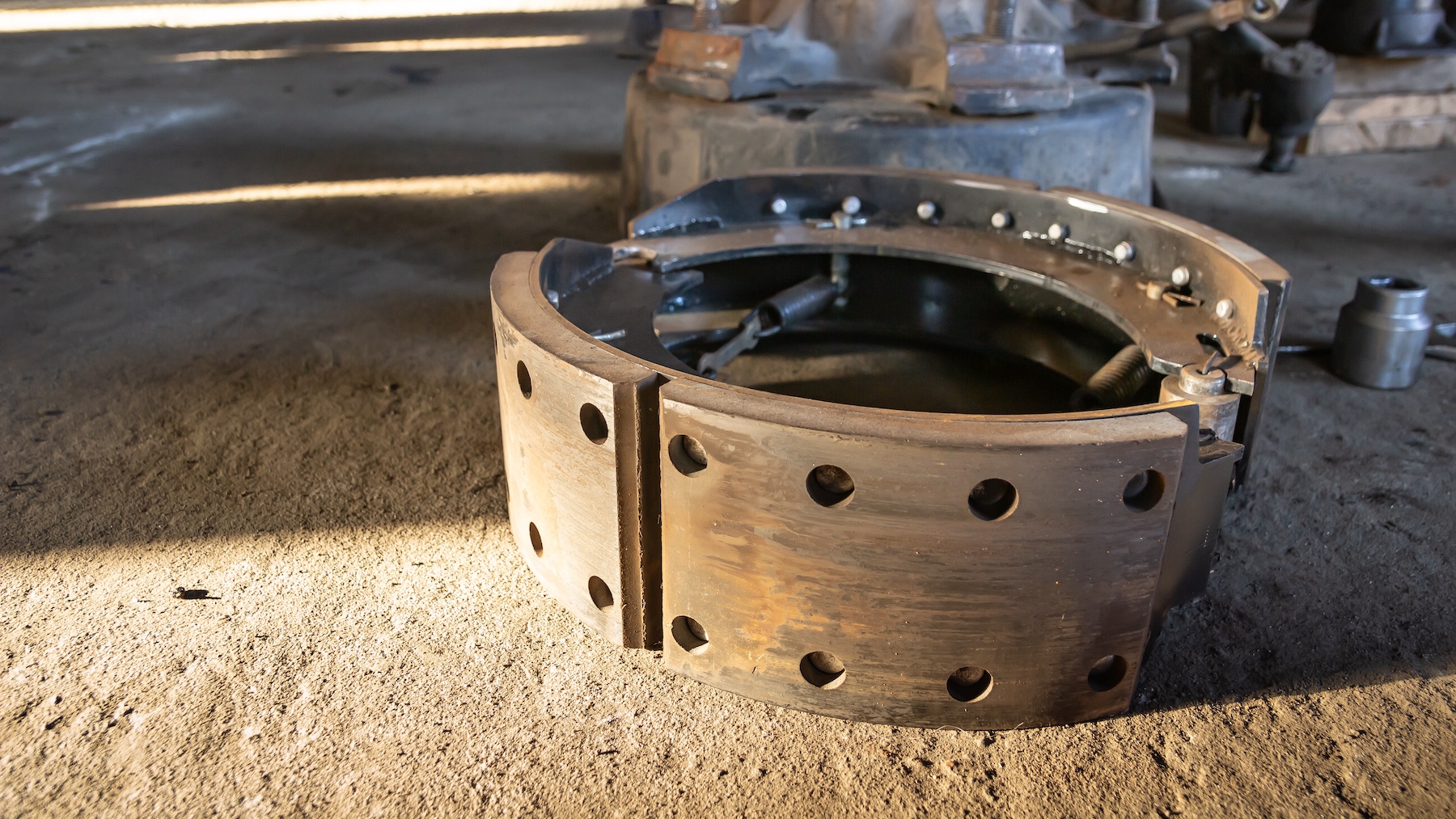
Heavy-duty non-asbestos brake linings are made from a carefully engineered mix of ingredients, such as aramid fibers, graphite, barite, metal powders, resins and various friction modifiers. Each ingredient plays a role in how the lining performs.
Some provide the baseline friction that creates stopping force. Some manage heat dissipation. Some protect drum surfaces from abrasive wear. And some maintain structural integrity as the lining heats and cools through thousands of brake applications.
But here’s the catch.
Not all sources of these materials produce the same results in a brake lining. Considerations like mineral purity, particle size consistency, and processing quality can vary widely depending on where a mineral is sourced and how it’s prepared.
For instance, graphite from a consistent, well-controlled supply chain gives a formulator much more predictable material to work with. Lower-quality or inconsistently processed graphite introduces variability. And in friction material, variability is the last thing you want when you’re looking for safe, reliable performance.
The Filler Bait ‘n Switch
One way manufacturers can drive the cost of a brake lining down is by substituting cheaper filler materials for more expensive ingredients. And that’s one of our concerns with the cheap Chinese brake components we’ve been talking about throughout this blog series.
Fillers can reduce raw material costs, but those substitutions can also affect friction stability, heat response, drum wear and service life – all of which can trace back to what went into the mix before the lining was ever formed.
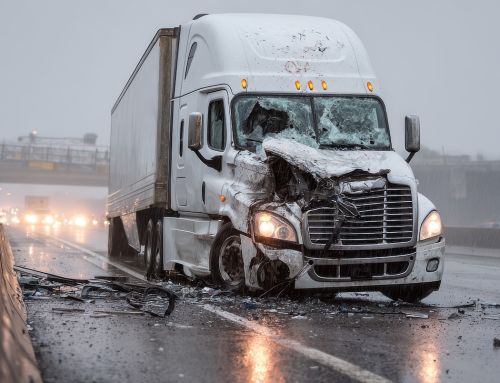
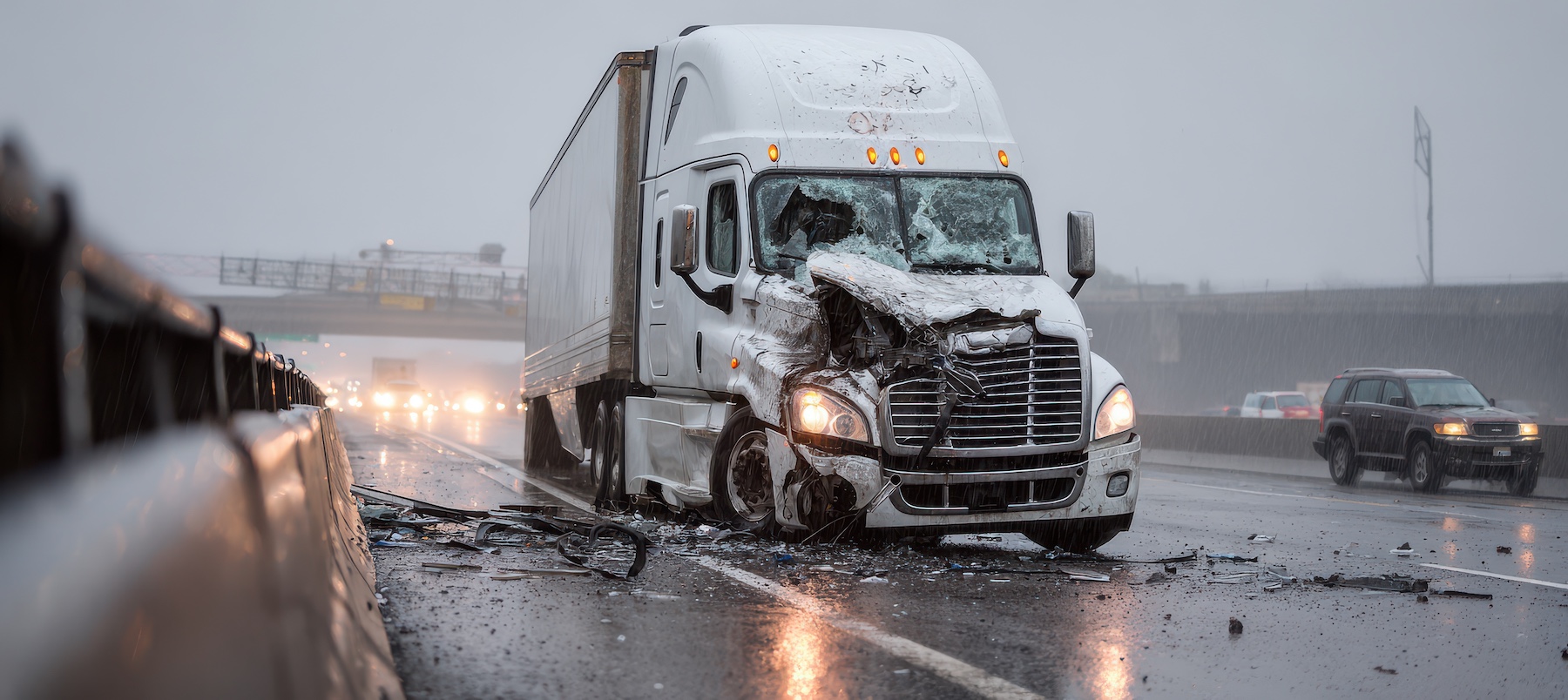
Still, the frustrating reality is that a filler-heavy lining and a quality lining can look completely identical on a shelf. Same dimensions. Same color. Same application. The difference can go unnoticed until the truck needs to stop hard on a steep downgrade with a full load behind it.
That’s when mineral quality – or the lack of it – can reveal itself in the most consequential way.
Let’s Talk Sustainability
Here’s an angle that deserves more attention. Brake linings that wear out prematurely aren’t just a safety problem. They’re a waste problem.
Every premature brake replacement means more raw materials consumed, more manufacturing energy spent, and more worn-out components heading to the scrap pile ahead of schedule. When you multiply that across a fleet running lower-quality linings, the environmental discussion gets uncomfortable fast.
Quality friction material lasts longer and makes a difference on the balance sheet. You’ve got fewer replacement cycles, less material waste, and less shop time. Sustainability in trucking doesn’t start with the fuel tank. It starts with every component on the truck being built to last as long as it possibly can.
The NeoBrake Formula
Our Founder and CEO Rick Ballew traveled the world looking for high-quality sources of mineral compounds as he worked to develop the non-asbestos friction material that became the foundation of NeoBrake.
Our NeoKinetic Friction Technology™ is a formulation philosophy born on one conviction: raw material quality is non-negotiable. We use the same high-quality mineral compounds and premium resins we have always used. We don’t substitute. We don’t fill. We don’t engineer a cheap version for a lower price point and call it acceptable.
That discipline shows up in real-world outcomes. Our nonabrasive NB1088 TFT linings are designed to protect drums rather than grind them down. Our high-performance formulations are designed to maintain consistent friction characteristics across the temperature ranges a working truck encounters. Not just in a lab setting, but mile after mile, load after load, season after season.
The mineral compounds in your brake linings are not an afterthought. They are the product. Choose those minerals carefully. Or choose a manufacturer who already did.
That’s been our formula since 1988. It still is.
So, what’s stopping you?